Guide · when to come · Cambridge
The best time of year to visit Cambridge
Almost everyone gets one thing backwards about this city. They assume May is the warm month and September is the tail end of the season. The Met Office averages say the opposite: September runs about two degrees warmer than May, and the crowds have gone home by then.
 Written and guided by Jordan Harrington, Cambridge punting guide since 2021
The short answer
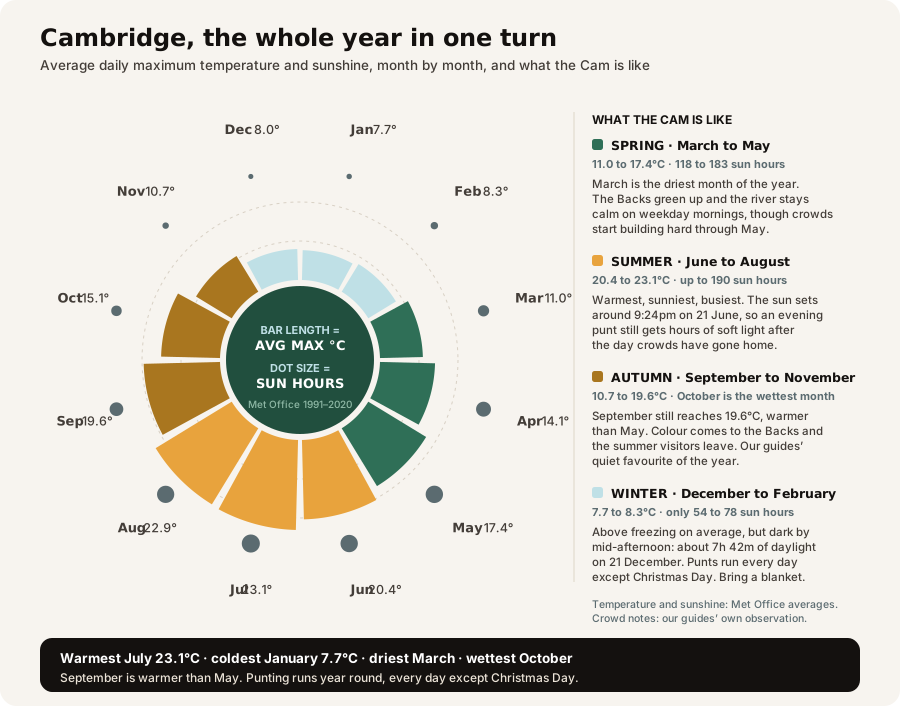
September, then late May and June. On Met Office 1991 to 2020 averages for Cambridge, September still hits 19.6°C on an average day, warmer than May's 17.4°C, and it sits outside the school holidays. July and August are the warmest at 23.1°C and 22.9°C, and also the fullest. October and November swap a few degrees for autumn colour on the College Backs and a city you can move around in. Winter is cold, dark by mid-afternoon and genuinely quiet, and the river still runs every day except Christmas Day.
What is the best time of year to visit Cambridge?
September, if you want one answer. It averages a 19.6°C daily maximum, warmer than May and only a degree off June, the schools are back, and the colleges have reopened after the summer. Late May and June come next. July and August are hotter and sunnier but carry the crowds and the graduation season. October and November are the pick if calm and colour matter more to you than warmth.
The reason September wins is a quirk of geography rather than an opinion. England warms slowly and cools slowly, so the peak lags the solstice by six or seven weeks. Spring here is a promise; autumn is the payout.
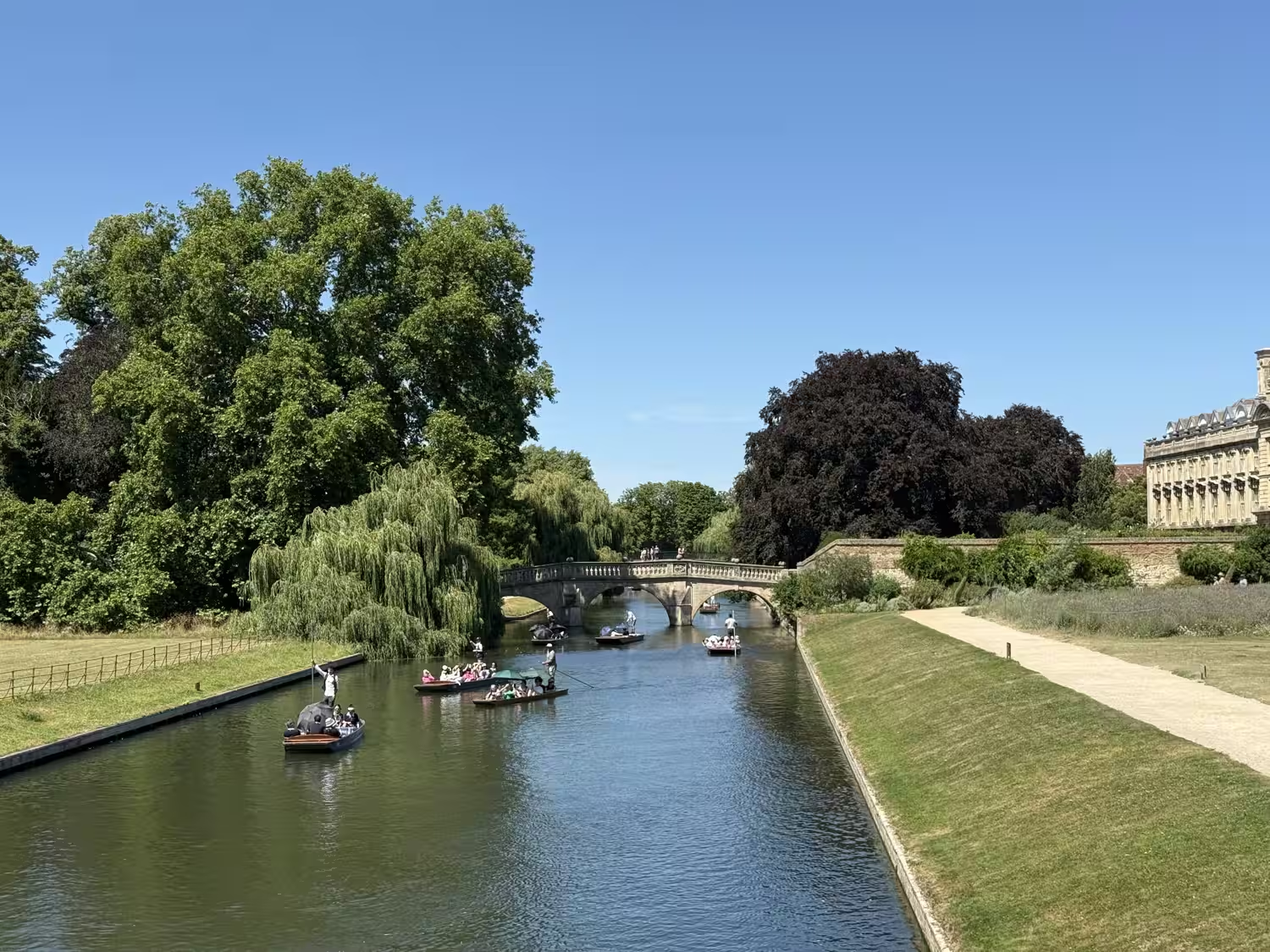
What that means on the ground: a September afternoon on the Cam feels like a June one, minus the queue at the punt station and the coach parties on King's Parade. I have poled through five of them. The light in the second half of September, coming in low across the Backs around five o'clock, is the thing I would put on the poster.
None of which makes any month a bad one. Cambridge is a working university city, not a resort that shuts. It just gives you a different thing each time.
| If you want… | Come in | The reason |
|---|---|---|
| The warmest days | July, August | 23.1°C and 22.9°C average maximums, the two warmest months of the year |
| The most sun | July | 190 hours on average, the sunniest month. May and June are close, near 183 |
| The longest evenings | June | Sunset near 9:24pm on 21 June, almost 16 hours 45 minutes of daylight |
| The driest weather | March | 32.9mm on average, the driest month. February is next at 35.7mm |
| Warmth without the peak | September | Still 19.6°C, warmer than May, and outside the school holidays |
| Photos and autumn colour | October, November | The turn along the Backs, low sun, and the summer visitors gone |
| A city to yourself | January, February | Coldest and darkest at 7.7°C and 8.3°C, but nothing is queueing |
Temperature, rainfall and sunshine: Met Office long-term averages for Cambridge Niab, 1991 to 2020.
Cambridge season by season
Spring warms fast and stays dry: March is the driest month of the whole year. Summer is warmest, sunniest and busiest, with light until past nine in June. Autumn holds its heat into September, then turns gold and empties out. Winter is above freezing on average but short on daylight, and the city leans into Christmas.
Here is each one honestly, including the part the brochures skip.
Spring, March to May
March is the surprise. It averages just 32.9mm of rain, less than any other month, and 118 hours of sun against January's 57. The city shakes off the dark quickly. Temperatures climb from 11°C in March to 17.4°C in May, which sounds modest and feels better than it reads, because the wind drops and the gardens along the Backs come back to life.
The catch: by May the crowds are already building, Lent Bumps and the Cambridge Half have brought their own people in March, and the colleges start closing to visitors for exams from around mid-April. Weekday mornings stay calm on the river well into May.
Summer, June to August
The postcard, and the queue. July averages 23.1°C and 190 hours of sun; August is barely cooler at 22.9°C but wetter, at 55.9mm. June's gift is light: nearly 16 hours 45 minutes of it at the solstice, sun still up at 9:24pm.
That last figure is worth building a day around. An evening punt in late June leaves after the day-trippers have gone and still runs in full, soft light. It is the single best trick I know for summer here, and it costs nothing but a later booking.
Autumn, September to November
My favourite, and not by a small margin. September's 19.6°C beats May outright. October brings the colour and, fairly, the year's heaviest rain at 58.7mm, though that is still under 60mm and comes in bursts rather than a monsoon. By November you are down to 10.7°C and 68 hours of sun for the month, and the Backs feel like they belong to whoever bothered to show up.
Autumn also brings term back. Michaelmas Full Term ran 6 October to 4 December in 2026, so the city refills with students, which is a different energy from tourism entirely. The colleges look inhabited again rather than exhibited.
Winter, December to February
Colder than people fear and darker than they expect. January averages a 7.65°C maximum and December 7.95°C, both comfortably above freezing, so this is a coat problem, not an ice problem. Daylight is the real constraint: about 7 hours 42 minutes on 21 December, with the sun down by roughly 3:48pm.
Plan mornings and early afternoons, and winter Cambridge is superb. Stone, low sun, no crowds, and the Christmas run of things below.
| Season | Avg max temp | Rain per month | Sun per month | On the river |
|---|---|---|---|---|
| Spring (Mar to May) | 11.0 to 17.4°C | 32.9 to 43.2mm | 118 to 183 hrs | Calm early, filling up by May. Weekday mornings are the sweet spot |
| Summer (Jun to Aug) | 20.4 to 23.1°C | 48.3 to 55.9mm | 181 to 190 hrs | Busiest of the year. Book ahead, or take an evening slot |
| Autumn (Sep to Nov) | 10.7 to 19.6°C | 47.6 to 58.7mm | 68 to 144 hrs | Warm into September, then gold and quiet. Our pick |
| Winter (Dec to Feb) | 7.7 to 8.3°C | 35.7 to 49.2mm | 54 to 78 hrs | Quietest. Runs every day but Christmas Day. Covers and blankets |
Crowd notes are our guides' own observation from the water, not published data. Weather figures: Met Office, 1991 to 2020.
What is the weather like in Cambridge?
Dry by British standards and mild rather than extreme. No month averages more than about 59mm of rain, and the annual spread is narrow: 32.9mm in March at the low end, 58.7mm in October at the high. Average daily maximums run from 7.65°C in January to 23.08°C in July. Every month sits above freezing on average.
Cambridge sits in one of the driest corners of England, and the numbers bear that out. The useful takeaway is not "when will it rain" but "it might rain a bit any month, and it will not ruin your day." Rain here arrives as showers far more often than as a settled grey ceiling.
That has a direct bearing on the river. Punts usually still go out in light rain, with covers up and blankets in the boat, and I have run plenty of trips where the drizzle stopped halfway and nobody minded. We wrote the honest version of that in punting in the rain.
| Month | Avg max temp | Rainfall | Sunshine |
|---|---|---|---|
| January | 7.65°C | 48.6mm | 57 hrs |
| February | 8.30°C | 35.7mm | 78 hrs |
| March | 11.00°C | 32.9mm driest | 118 hrs |
| April | 14.12°C | 37.6mm | 157 hrs |
| May | 17.37°C | 43.2mm | 183 hrs |
| June | 20.36°C | 49.1mm | 182 hrs |
| July | 23.08°C warmest | 48.3mm | 190 hrs sunniest |
| August | 22.85°C | 55.9mm | 181 hrs |
| September | 19.58°C | 47.6mm | 144 hrs |
| October | 15.11°C | 58.7mm wettest | 110 hrs |
| November | 10.72°C | 52.6mm | 68 hrs |
| December | 7.95°C | 49.2mm | 54 hrs darkest |
Source: Met Office location-specific long-term averages, Cambridge Niab station, 1991 to 2020. Averages, not forecasts. Check the forecast for your dates.
Daylight swings harder than temperature does, and it catches people out more. On 21 June the sun is up from about 4:38am to 9:24pm. On 21 December it manages 8:06am to 3:48pm. Same city, half the day.
When is Cambridge busiest, and when is it quietest?
Busiest in high summer, sharpened by the early-July graduation ceremonies and the school holidays. Quietest in January and February, with October and November not far behind. But be careful with anyone who gives you exact monthly visitor numbers: no one publishes them. Visit Cambridge reports over 7.6 million visitors a year to the area, and that is where the official data stops.
So instead of inventing a chart, use the calendar the university actually publishes. It drives more of this city's rhythm than the weather does.
- Early July is the tightest week of the year. General Admission, the main graduation ceremonies, ran 1 to 4 July in 2026, four Congregations at 10am. Every family of every graduand is in town, in a gown, booking the same restaurants.
- June is May Week. The name is a leftover: the balls, June Events and garden parties moved out of May in 1882 and the label stuck. It runs after Easter Term exams finish, and overlaps the May Bumps rowing races, held in June (17 to 20 June in 2026). The river is at its most alive and its most congested.
- Mid-April to early July, some colleges shut their gates. Exam term. There is no single university-wide rule, so check the college you care about. Queens' publishes an examination-period closure and listed 19 April to 4 July for 2026; King's says it may restrict access particularly during exams.
- Term brings students, not tourists. Michaelmas Full Term ran 6 October to 4 December 2026, Lent 19 January to 19 March 2027, Easter 27 April to 18 June 2027, per the official term dates. Busy streets, but a different crowd, and the colleges look lived in.
The pattern that falls out of this: the golden window is mid-September to late October. Summer visitors gone, exam closures long over, colleges open, weather still holding at 19.6°C then 15.1°C. The other window is late January to early March, if you will trade warmth for having the place practically to yourself.
On the water specifically, the busiest block of the day is reliably noon to 4pm, whatever the month. Our punting-specific timing guide goes into the hours in detail. If you are building the rest of the day around it, things to do in Cambridge covers what fills the gaps.
Book your punt
Ready to get on the River Cam?
Shared, private and student-guided punts run daily along the College Backs. See the live price and free-cancellation terms on the operator's official listing before you pay.
Check live availability & prices →4.7 · 1,521 reviews · free cancellation up to 24 hours
When is the best time to go punting?
The river runs year round, every day except Christmas Day, so there is no season you have to hit. For the best combination of warmth and calm, take a weekday morning or late afternoon in May or September. A chauffeured run along the Backs takes about 45 to 50 minutes whatever the month.
That is the short version. The long version has its own page, because timing a punt is a different question from timing a trip: it turns on the hour more than the month, and on whether you want the golden autumn light or the long June evenings. Read the best time of year to go punting in Cambridge for the detail, including the hour-by-hour breakdown.
Two things worth knowing before you pick a slot. Winter punting is real and pleasant, not an endurance test: it is above freezing on average and the punts carry blankets. And light rain rarely stops a tour. What actually decides your experience is the crowd on the water, which is why noon to 4pm in July is the one combination I would steer you away from.
If you have not settled on where to get on, our guide to where to go punting in Cambridge covers the six licensed stations and which ones reach the Backs.
What is on in Cambridge through the year?
Enough to plan a trip around, and less than most listicles claim. Below are the annual events we could confirm are real and still running, with their official sources. Several Cambridge favourites have wobbled recently, so check dates before you book flights.
This is a shorter list than you will find elsewhere, on purpose. A handful of "annual" Cambridge events that still float around the internet did not run in 2025.
| When | What | The honest note |
|---|---|---|
| Late Feb to early March | Lent Bumps | College rowing, on the Cam. Free to watch from the bank |
| March | Cambridge Half Marathon | Starts on Midsummer Common. Road closures across the centre |
| March to April | Cambridge Festival | The university's public festival. Mostly free, mostly bookable ahead |
| Late May | Cambridge Beer Festival | Long-running. Ran 18 to 23 May in 2026 |
| June | May Bumps and May Week | Held in June despite the name. The river's biggest week |
| Early July | General Admission (graduation) | Not an event you attend, but it fills the city. 1 to 4 July in 2026 |
| July | Cambridge Folk Festival | Cancelled in 2025 after losses. A revitalised return was announced for July 2026 |
| Late Oct to early Nov | Cambridge Film Festival | The 45th edition was set for 22 October to 1 November 2026 |
| Early November | Fireworks on Midsummer Common | The city council's annual free display |
| Mid-Nov to end Dec | Christmas in Cambridge market | On Parker's Piece. Ran 13 November to 31 December in 2025 |
| Early December | Mill Road Winter Fair | One street, one day, and the best of local Cambridge. 5 December 2026 |
| 24 December | Nine Lessons and Carols | King's College Chapel, Christmas Eve. Free, but people queue from dawn |
One we have deliberately hedged: Strawberry Fair on Midsummer Common, usually early June. It is real and much loved, but no fair ran in 2025 because of financial pressure, and a return was scheduled for 6 June 2026. Check the official site rather than a travel blog before you count on it.
Visit Cambridge, the city's official tourism body, keeps the fullest live calendar. We list only what we could verify still runs.
How do you plan a Cambridge day around the daylight?
Work backwards from sunset rather than forwards from opening times. On 21 June the sun is up until about 9:24pm, so an evening punt still runs in full light. On 21 December it has gone by about 3:48pm, which puts a winter trip on the water before lunch rather than after it.
Daylight is the variable that changes a Cambridge day most, and it is the one people plan around least. Temperature you can dress for. A dark riverbank at four in the afternoon you cannot.
The other half of the timing question is the crowd, and that one barely moves through the year. Noon to 4pm is the busiest block on the water whatever the month, so the two ends of the day are consistently calmer. In summer that means an early slot or an evening one. In winter the early slot is the only sensible option, because the late one has no light left in it.
Here is how I would place the punt in a day, month by month, and what to do with the hours around it.
| When you are visiting | The light you are working with | Put the punt at | Fill the rest with |
|---|---|---|---|
| December to February | About 7 hrs 42 min on 21 December, sunset near 3:48pm | Late morning, or straight after lunch | Indoor Cambridge afterwards: the Fitzwilliam, the market, a long lunch |
| March and April | Lengthening fast. March is the driest month of the year at 32.9mm, with 118 hours of sun | Mid-morning or mid-afternoon, either works | The centre on foot while it is dry, and colleges before the exam-period closures start |
| May and June | The peak: nearly 16 hrs 45 min on 21 June, sunset about 9:24pm | An evening slot, after the day trippers have gone | Colleges and museums in the day, the river as the last thing you do |
| July and August | Still long, and the warmest of the year at 23.1°C and 22.9°C | Before 10am or after 4pm. Avoid noon to 4pm | The Fitzwilliam in the middle of the day, when the water is at its busiest |
| September and October | Shortening, but September still averages 19.6°C. October is the wettest month at 58.7mm | Mid to late afternoon, for the low light along the Backs | A morning walk of the centre, and a waterproof in the bag either way |
| November | Down to 10.7°C, with only 68 hours of sun across the whole month | Early afternoon, and take the layer seriously | Autumn colour on the Backs, then indoors before the light goes |
Daylight, temperature, rainfall and sunshine from the Met Office averages above. The noon-to-4pm crowd pattern is our guides' own observation from the water, not published data.
The hour-by-hour version of this, written for the river rather than the city, is in the best time of year to go punting in Cambridge.
Which month suits which kind of visitor?
There is no single best month, only a best month for what you came for. Warmth, quiet, autumn colour, long evenings and low prices do not all land at once. The honest planning move is to pick the one you care about most and let the others fall where they fall.
Most trip advice for Cambridge answers a question nobody asked, which is when the weather is nicest. That is July, and July is also the month with the most people in it. The more useful question is which trade you are willing to make.
| If you are… | Aim for | Because |
|---|---|---|
| A first-time visitor with a single day | Mid-September to late October | Colleges open again after the summer, still 19.6°C then 15.1°C, and the summer visitors have gone |
| Tied to the school holidays | Late July or August | The warmest weeks of the year at 23.1°C and 22.9°C. Book the punt ahead, because this is the peak |
| Here for photographs | October and November | The turn along the Backs, and low sun. October is also the wettest month at 58.7mm, so carry a layer |
| Planning a proposal or an anniversary | Late May into June, in the evening | Light until about 9:24pm at the solstice, and a private punt once the day crowds have left |
| Watching the budget | January to March | The quietest stretch of the year, and punting prices sit softest away from peak summer weekends |
| Curious about the university itself | Term time, such as Michaelmas, 6 October to 4 December in 2026 | Students back, colleges lived in rather than exhibited |
| Set on avoiding queues entirely | Any weekday morning, any month | The busiest block is noon to 4pm, and off-season walk-ups rarely wait at all |
| Coming for one big Cambridge occasion | June | May Week and the May Bumps, held in June despite the name, 17 to 20 June in 2026 |
Weather from Met Office 1991 to 2020 averages. Term and event dates from the university and the Cambridge University Combined Boat Clubs. Crowd and pricing patterns are observation and typical operator behaviour rather than fixed rules.
If your answer to all of the above is simply "cheapest", read the Cambridge punting prices guide first, because the day of the week and the hour move the number as much as the month does.
What should you wear for the month you are coming?
Dress one layer warmer than the forecast suggests. A punt is a still, low seat over moving water, so the air on the river runs a notch cooler than the air on King's Parade, in any month. That single rule fixes more uncomfortable trips than anything else I say at the station.
I have poled through every month of the Cambridge year since 2021, and what people get wrong is remarkably consistent. In summer they underestimate the sun, because you sit low with the river throwing light back up at you and there is very little shade along the Backs. In winter they overdress the body and forget the hands. In spring and autumn they trust a mild forecast and bring nothing to put on over it.
Notice what is not on this list: anything special. There is no punting outfit. Flat shoes with some grip, layers you can peel off, and something waterproof folded into a bag will carry you through the entire year.
| Season | What the averages say | What I would wear on the water | The thing people forget |
|---|---|---|---|
| Spring, March to May | 11.0°C to 17.4°C, and the driest months of the year | Layers, a light jumper, a packable waterproof | The sun is stronger than the temperature suggests once it bounces off the water |
| Summer, June to August | 20.4°C to 23.1°C, with 181 to 190 hours of sun a month | Breathable clothes, a brimmed hat that will not blow off, sunglasses | Ears and the back of the neck. Glare off the Cam is relentless |
| Autumn, September to November | 19.6°C down to 10.7°C. October is the wettest month at 58.7mm | A warm layer, a scarf, a waterproof on standby | How fast the light goes in November, a month with 68 hours of sun in total |
| Winter, December to February | 7.7°C to 8.3°C, above freezing but short on daylight | A proper coat, gloves, a hat, and the blanket if it is offered | Hands, not the body. And an earlier slot than feels necessary |
Temperature, rainfall and sunshine from Met Office 1991 to 2020 averages for Cambridge Niab. The clothing advice is my own, from the back of the punt. Blankets and covers are offered by many chauffeured operators rather than guaranteed by all of them.
Rain rarely cancels anything here. Punts usually still go out in light drizzle with the covers up, and Cambridge sits in one of the drier corners of England, with no month averaging more than about 59mm. The longer version of all this is in what to wear punting in Cambridge and punting in the rain.
Best time to visit Cambridge: FAQ
What is the best time of year to visit Cambridge?
September, then late May and June. On Met Office 1991 to 2020 averages, September still reaches 19.6°C on an average day, warmer than May at 17.4°C, and it falls outside the school holidays. July and August are the warmest at 23.1°C and 22.9°C, and also the busiest. October and November trade warmth for autumn colour and a much quieter city.
What is the warmest month in Cambridge?
July. The Met Office 1991 to 2020 average daily maximum is 23.08°C, with August just behind at 22.85°C. July is also the sunniest month at 190 hours. January is the coldest, at 7.65°C.
What is the rainiest month in Cambridge?
October, at about 58.7mm on average, with August second at 55.9mm. Rain is spread fairly evenly here rather than concentrated in a wet season. March is the driest at 32.9mm, then February at 35.7mm. No month averages more than about 59mm.
When is Cambridge least crowded?
Nobody publishes a month-by-month visitor count for Cambridge, so treat any precise claim with suspicion. What is published is the university calendar. The city is fullest in high summer, through the early-July graduation ceremonies and the school holidays. On the river, our guides find January and February quietest, with October and November close behind.
Is Cambridge worth visiting in winter?
Yes, if you plan around the daylight. The average daily maximum is 7.65°C in January and 7.95°C in December, so it stays above freezing, but 21 December gives only about 7 hours 42 minutes of light and the sun sets near 3:48pm. December brings the Mill Road Winter Fair, the Christmas market on Parker's Piece, and Nine Lessons and Carols at King's College Chapel on Christmas Eve.
Can you go punting in Cambridge in winter?
Yes. Punting runs year round, every day except Christmas Day. Winter is short on daylight rather than impossible: the January average maximum is above freezing, chauffeured punts often carry covers and blankets, and tours usually still run in light rain. Start earlier in the day, because the light goes by mid-afternoon.
When are the Cambridge colleges closed to visitors?
It varies by college and there is no single university-wide schedule, so check the one you want before you travel. Many restrict or close visitor access during the exam period in Easter Term, plus ceremonial days and the Christmas holidays. Queens' publishes an examination-period closure and listed 19 April to 4 July for 2026; King's notes it may restrict access particularly during exams. The River Cam has no such closures, which is one reason punting works when the gates do not.
What is May Week in Cambridge and when is it?
May Week is the university's end-of-year celebration period: May Balls, June Events and garden parties, held once Easter Term exams finish. Despite the name it happens in June. The label stuck after the events shifted out of May in 1882. It overlaps the May Bumps rowing races, also held in June.
Whatever month you land in, the river is open
Start with the most-booked option: a shared chauffeured punt along the Backs, past King's, the Bridge of Sighs and the Mathematical Bridge, with the live price and cancellation terms shown before you pay.